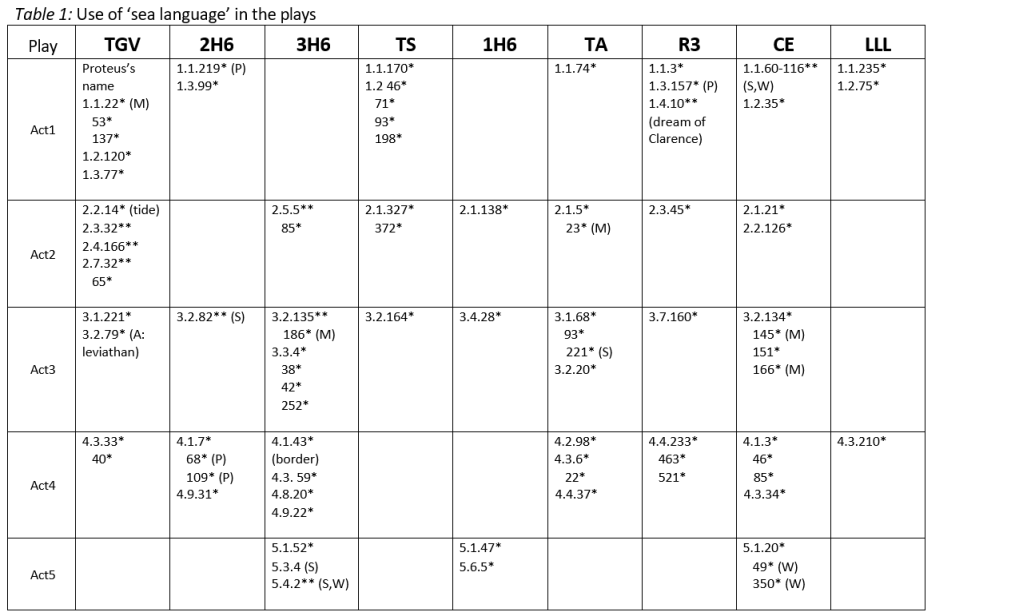
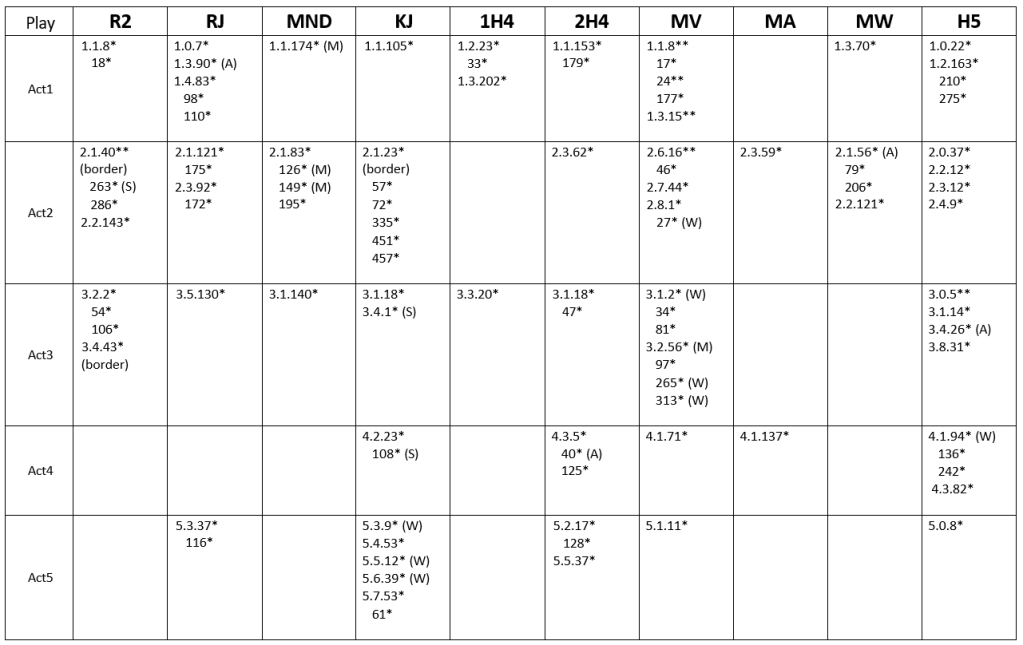
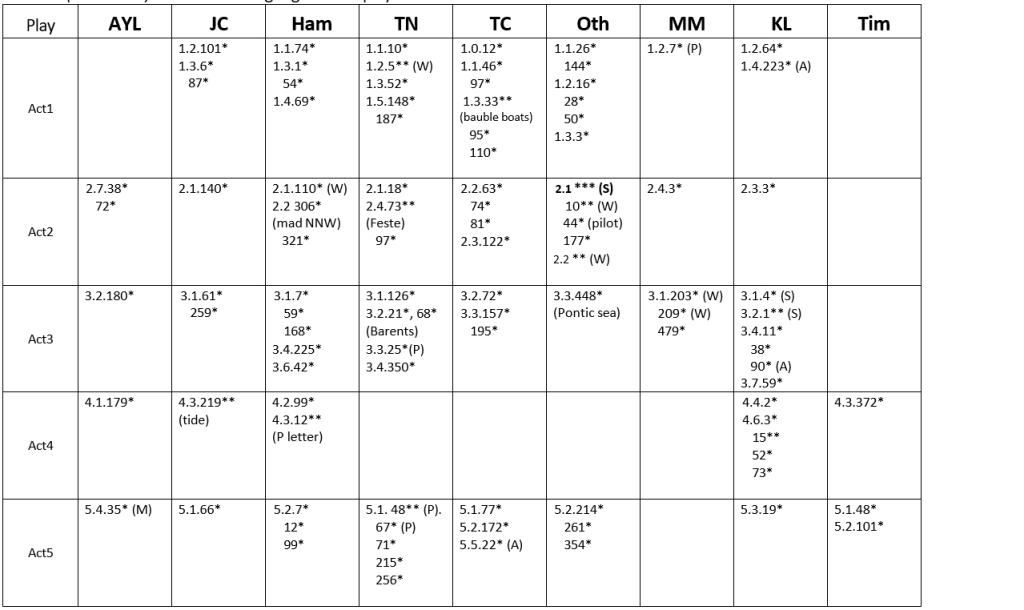
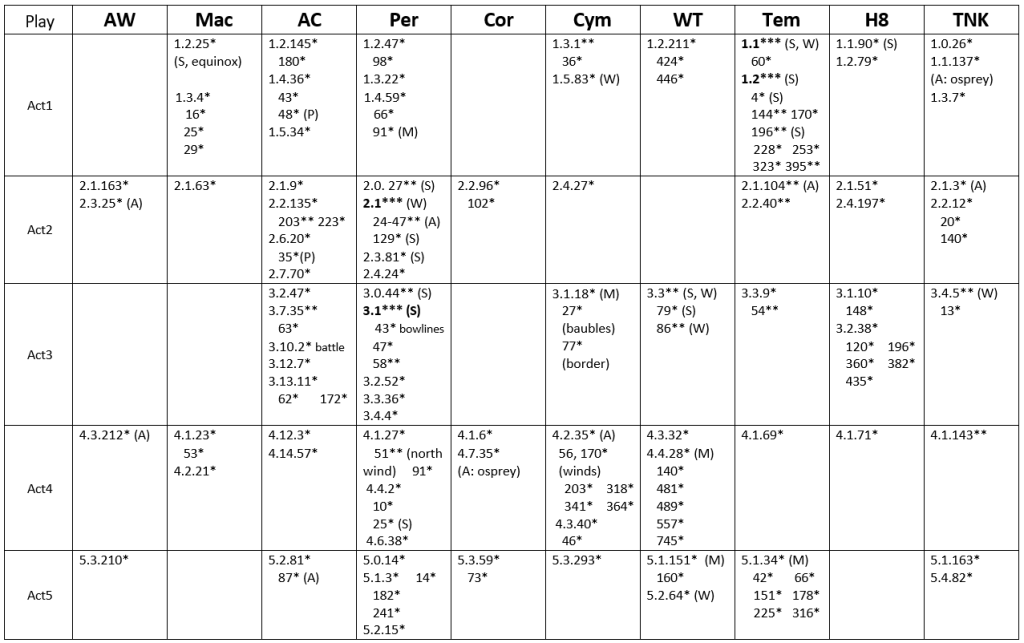
The sea is frequently mentioned—and used as a metaphor—in the dramatic works of Shakespeare. To provide myself an overview, I created the table presented below.
I originally intended to investigate the entire canon of Shakespeare’s plays in regard to shipwrecks, but found it astonishingly difficult to define that canon. One could easily fill another book on this issue alone.
I decided to include the thirty-six plays contained in the First Folio plus those two which are reported to be co-authored: Pericles and The Two Noble Kinsmen. However, I could not convince myself to include Edward III or Sir Thomas More.
As the main source of the text, I used The Norton Shakespeare (2016, online version), edited by Stephen Greenblatt and others. There is no special reason for this beyond personal preferences regarding handling and layout. Line numberings follow the (1.1.1) format and are taken from what I felt to be the ‘main version’ of the play.1
The abovementioned edition was carefully examined for ‘sea language’ and for metaphors using seas and ships. One star (*) refers to one line or several lines, two stars (**) denote a speech dedicated to the sea, and three stars (***) are given when a whole scene is concerned with the sea. There is no mathematical formula behind this categorisation, it is based on prima vista impressions.
References to shipwrecks, including allusions, are marked with (W), storms are marked with (S), mythological references with (M) and lines mentioning sea animals with (A).
The plays are presented in the sequence given in The Norton Shakespeare, the abbreviations for the play titles are listed here.
Have a look. What do you think? Did you expect more or less ‘sea language’?
- Where Norton Shakespeare presents several versions of the play, quotes were usually taken from the version presented first, or from a ‘combined’ text. ↩︎
 Shakespeare's Shipwrecks